I am a big fan of Ruth Padel and after reading 'The Soho Leopard' bought many of her earlier collections. Voodoo Shop is from 2002.
Wow. Where to begin? This collection follows the stages of a love affair, the lovers travelling the world and their relationship explored through the different locations and experiences that they share, from buying twin voodoo dolls in South America, to watching flocks of seabirds in Ireland. Along the way bereavement, sex, love, infidelity/illicit affairs and the breakdown of a relationship are explored with Padel's trademark style: painterly, exotic and lyrical with human experience linked inextricably with the natural world. This collection is an eclectic mix of imagery, emotion and language, and is completely different to what I expected. I absolutely loved it.
Favourite poems? There are so many killer lines throughout the collection, and while eclectic it holds together so well, that it is difficult to choose individual poems, but I would have to say 'Hey Sugar, Take A Walk On The Wild Side', where the lovers are compared exquisitely to olive oil; 'Rattlesnakes And Rubies' for the colours and the humour; and the final poem, 'Casablanca and the Children of Storm' for its true-to-life emotions and magical descriptions of seabirds.
Padel's writing in Voodoo Shop is wonderful; it's sometimes verging on obscure but always beautiful, and very original. I get the feeling that she is a poet who really appreciates the music of words and images. Even when writing about sadness or even crudeness, she manages to bring a lightness of touch and beauty to difficult subjects.
This collection really touched me and I'm sure it will remain one of my favourites. I couldn't put it down when I was reading it - I raced from poem to poem, and will enjoy going back to it over the years to savour it again.
Tuesday, July 26, 2011

Tuesday, July 19, 2011
The Reluctant Fundamentalist by Mohsin Hamid
Finished this a couple of days ago, having started it ages ago, let it drop to the bottom of the pile and then finished it off. Thought it sounded interesting: literature with a certain sense of the 'exotic' always appeals to me and it was shortlisted for the Booker or something.
How can I describe this book? It takes the form of a conversation between the narrator Changez and a silent American who he meets in downtown Lahore, Pakistan. We only read Changez's contribution to the conversation as he invites his new aquaintance to dine with him whilst telling his story. Turns out that Changez is a Princeton graduate who lived and loved in America for several years. His reminiscences of his time in America are interwoven with one-sided exchanges with the silent American and evocative, painterly descriptions of the Lahore district they are dining in. The story of Changez is no great adventure but presents a compelling view of what it is like to be an outsider, in both your home country and foreign places, and offers a perspective on such events as 9/11 that we don't often get to hear about in the West.
The form of the novel as half of a conversation between two people made it very readable and easy to get into. I wouldn't say that the style was amazing or even literary - I was surprised that this was nominated for the Booker; to me it was more like an easy holiday read - but it was accessible and kept me reading. I found the characterisation to be well-constructed. Changez's voice is believable, with the flaws, confusion and inconsistency of a real human being. I found the perspective and underlying message of the book thought-provoking and interesting, although the ending was a bit disappointing. For me it was just a little too open to be satisfying, particularly when seen in the context of the hints dropped throughout the book.
In short, I enjoyed it, it made me think, and it was a quick and easy read. But not amazing. Something I'd buy at an airport, read on holiday, and to be honest it'sbeen a couple of days since I finished it and I'm already forgetting it. 5/10.
How can I describe this book? It takes the form of a conversation between the narrator Changez and a silent American who he meets in downtown Lahore, Pakistan. We only read Changez's contribution to the conversation as he invites his new aquaintance to dine with him whilst telling his story. Turns out that Changez is a Princeton graduate who lived and loved in America for several years. His reminiscences of his time in America are interwoven with one-sided exchanges with the silent American and evocative, painterly descriptions of the Lahore district they are dining in. The story of Changez is no great adventure but presents a compelling view of what it is like to be an outsider, in both your home country and foreign places, and offers a perspective on such events as 9/11 that we don't often get to hear about in the West.
The form of the novel as half of a conversation between two people made it very readable and easy to get into. I wouldn't say that the style was amazing or even literary - I was surprised that this was nominated for the Booker; to me it was more like an easy holiday read - but it was accessible and kept me reading. I found the characterisation to be well-constructed. Changez's voice is believable, with the flaws, confusion and inconsistency of a real human being. I found the perspective and underlying message of the book thought-provoking and interesting, although the ending was a bit disappointing. For me it was just a little too open to be satisfying, particularly when seen in the context of the hints dropped throughout the book.
In short, I enjoyed it, it made me think, and it was a quick and easy read. But not amazing. Something I'd buy at an airport, read on holiday, and to be honest it'sbeen a couple of days since I finished it and I'm already forgetting it. 5/10.
Latitude 2011 & Good News!!
First the really cool news, today I signed up for abctales.com, where you can share your stories and poems online, and I uploaded two poems (unseen on this blog). Just found out that they have been cherrypicked by the editors and have had a warm reception from fellow abctales-ers! The poems are 'Plastic Lovespoon' and 'Blind Woman at Clapham Junction' and can be read here. Please take a look!
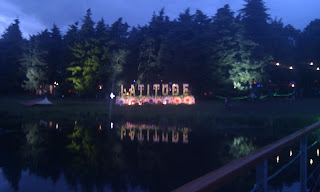
Latitude is a music festival with a difference, also featuring comedy, theatre and literature among much much more. I just got back from this year's festival and thought I'd write about the amazing wordsmithing I found there.
I spent a lot of time in the poetry tent and the poets that I saw read/perform include:
- Sophie Hannah
- Jo Shapcott
- Dizraeli and the Small Gods
- Amy Blakemore
- Hannah Jane Walker
- Kate Fox News
- Jack Dean
- Mab Jones
- Sam Riviere
Who shone? Dizraeli and the Small Gods - a beautiful, emotional mix of music, rap and poetry; Mab Jones - comic, honest poetry about life's minutiae, really loved it; Hannah Jane Walker for thought-provoking, lyrical poems; and Amy Blakemore for a young voice with surprising maturity and real originality. I urge you to check these guys out online, they were fantastic, and I am going to try and persuade a bookshop that I know in Wales to book a reading with Mab Jones!
Who disappointed me? Well, no one really, all the acts I saw were of a really high quality. However, Sophie Hannah's reading was more like a rant and although humourous at times I also left wondering if she was a psychopath..... Sam Riviere's work seemed, from what I caught of it, to be about the issues of identity and being an outsider, including a long poem about a trip to America. Interesting but not my personal cup of tea. Jo Shapcott read a series of poems about bees, and at that point I had to leave. But I was disappointed with her reading - it lacked audience connection, I felt, and although I love her poetry, the beekeeper in me (yes, I do actually keep bees, have done for 6 years now I think) was frustrated with her overly simplistic explanations to the audience about the science behind the poetry, the science of bees, and her mis-pronunciation of the word 'propolis'. But that's just me being nit-pickety.
What really fascinated me however was the different reading/performing styles of the poets. Some read from books or pieces of paper, e.g. Amy Blakemore, Sophie Hannah, Jo Shapcott - whereas others recited their work from memory, e.g. Mab Jones, Dizraeli, Jack Dean. Both methods worked well but undoubtedly those who had memorised their poems gave more energetic performances. So I picked up some interesting tips for when I am brave enough to finally enter an open mic! Who knows, maybe at next year's Latitude...?
Anyway, just a few musings on the world of the live spoken-word performance. For those who are into performance poetry like me, I can highly recommend Latitude festival; the poetry line-up was wide-reaching, varied and inspiring.
Friday, July 8, 2011
Paul Henry Poetry Workshop 1
Wednesday night I went to Bookish in Crickhowell, Wales, and took part in a poetry workshop with poet Paul Henry. It was a great success, a lovely workshop in a cosy atmosphere. A little daunting reading my work out to a bunch of complete strangers! But really improved my confidence in a workshop setting and met some lovely people.
We began with a free-writing exercise, based on the theme of 'where I come from...', before looking at a few poems based around the idea of place, and then attempting to write our own poetry. Everyone in the class came up with some really cool ideas, I was surprised and a little intimidated by the standard, even though half of us had never written anything before! Anyway, I didn't really do as well - it was a great workshop - but I felt that I lacked life & travel experience and distance from my birthplace which may have helped.
The 'poetry' I came up with isn't very good. The workshop made me become more aware of my writing process, through making me try a completely new method. I found writing after - or imitating the first line as a trigger - the poems we looked at (one by R.S Thomas, another by Kit Wright, another that I can't remember right now) challenging and completely new. These are the results so far, but there is nothing I am even slightly happy with yet. However I shall keep trying!
Anyway, this post will show you what I came up with during the workshop and afterwards. I hope it encourages others to come along to the next workshop or to take the plunge and go to a similar writing event. I'd never done anything like this before, and I have never shown my work to anybody in person before, let alone read it out loud, but I loved the experience and can't wait for the next one!
FREEWRITING: WHERE I COME FROM...
er, what shall I write? B_, or B_grad as I call it, kind of grotty but posh in places, or more precisely a little village called O_, a long high street of georgian-fronted houses built along a geological faultline between the clays and chalk & flint, surrounded by fields with its own castle, and of course the sound of the motorway/by-pass always going, cows behind the housing estate mooing in the heat, the swampy ponds in the fields with the fallen oak I used to climb as a kid, oh dear what next can't think of anything, the churchyard with the graves of the two French soldiers, rooks, jackdaws that descend on our garden and eat the animal food, mistletoe growing on oak trees, the river full of crayfish and trout and watermint, the canal where I once saw an otter with her cub,
WORKSHOP ATTEMPTS AT POETRY - came out more like more freewriting
To live in the Home Counties is to
be strung between the motorway and hedgerows
full of fruit as shiny as Next Door's new Audi
that cannot be left outside for fear of pigeon droppings. It is to
To live between two countries is to be always having to choose
Christmas in Wales or in England?
To live in my home town is to... (very scribbled 3rd draft)
be somewhere between the jaguar-driving cricket clubbers, ex-military, busy-bodied, feeding the charity shop with last week's trends: a gucci handbag, real italian leather, a laura ashley dress, a striped armani shirt - and the one's down B_ Road, where the drugs and murderers are. It is to revel in gossip, the GP dating the shopkeeper's estranged wife who had an affair with so-and-so, the scandal of the hint of the possibility of encroaching supermarkets versus the convenience of waitrose ready meals and the battle of the georgian-fronted high street and the affordable housing estates at christmas: tasteful blue lights, holly wreaths, versus houses bedecked with americana
POST WORKSHOP DRAFTING
Tiptoe over conifer needle-strewn tarmac for fear of dog shit, its orangey iron-smell sharp, making your nostrils flare. As you walk brambles claw their way over the tops of the fence, snagging your hair and clothes. Burs coat the hem of your sleeve. A snail's shell cracks underfoot. A blackbird cackles in fear, swooping in front of you like a dolphin before a ship.
The path is dark. Dank. Damp. Houses rise unfriendly behind the fences on either side. Blank windows. Net curtains. Peeking out from behind the conifer trees. The path is rising, inclined to the breast that continues, it seems, ito the grey ink of the sky. Stones, gravel, punching through the soles of your shoes.
Until you emerge, blinking, blinded and shocked by the view. A field of blue-green wheat stretching to a hedgerow horizon. Oast roofs in red and mossy tiles poke like upturned strawberries from amongst the greenery. Unseen cricket drums a lazy rhythm. The air tastes of poppies and mallows, watermint from the river, hobby farm sheep, oak trees.
You feel that you can breathe it in, this openness, the wheat
the egg-brown earth, its chalk, its flint, is unyielding beneath your feet.
DRAFT 3
dog shit, orangey iron-smell sharp, makes nostrils flare.
brambles clawing over top of fence, snag hair.
burs broider hem of sleeve. snail's shell cracks underfoot
blackbird cackles in fear, swoop
in front like dolphin before ship. Path. Damp. Narrow.
Houses unfriendly, fences: empty windows.
Net curtains. Peek.
path, inclined to grey sky ink.
emerge, blinking, shocked by view
field of blue
wheat stretches to hedgerow horizon. Oast roofs, red mossy
tiles, upturned strawberries amonst greenery.
Unseen cricket drums lazy
rhythm. air taste poppies, mallows, hobby farm sheep, oak trees
breathe it in, openness, wheat
egg-brown earth, chalk, flint, unyielding beneath my feet.
We began with a free-writing exercise, based on the theme of 'where I come from...', before looking at a few poems based around the idea of place, and then attempting to write our own poetry. Everyone in the class came up with some really cool ideas, I was surprised and a little intimidated by the standard, even though half of us had never written anything before! Anyway, I didn't really do as well - it was a great workshop - but I felt that I lacked life & travel experience and distance from my birthplace which may have helped.
The 'poetry' I came up with isn't very good. The workshop made me become more aware of my writing process, through making me try a completely new method. I found writing after - or imitating the first line as a trigger - the poems we looked at (one by R.S Thomas, another by Kit Wright, another that I can't remember right now) challenging and completely new. These are the results so far, but there is nothing I am even slightly happy with yet. However I shall keep trying!
Anyway, this post will show you what I came up with during the workshop and afterwards. I hope it encourages others to come along to the next workshop or to take the plunge and go to a similar writing event. I'd never done anything like this before, and I have never shown my work to anybody in person before, let alone read it out loud, but I loved the experience and can't wait for the next one!
FREEWRITING: WHERE I COME FROM...
er, what shall I write? B_, or B_grad as I call it, kind of grotty but posh in places, or more precisely a little village called O_, a long high street of georgian-fronted houses built along a geological faultline between the clays and chalk & flint, surrounded by fields with its own castle, and of course the sound of the motorway/by-pass always going, cows behind the housing estate mooing in the heat, the swampy ponds in the fields with the fallen oak I used to climb as a kid, oh dear what next can't think of anything, the churchyard with the graves of the two French soldiers, rooks, jackdaws that descend on our garden and eat the animal food, mistletoe growing on oak trees, the river full of crayfish and trout and watermint, the canal where I once saw an otter with her cub,
WORKSHOP ATTEMPTS AT POETRY - came out more like more freewriting
To live in the Home Counties is to
be strung between the motorway and hedgerows
full of fruit as shiny as Next Door's new Audi
that cannot be left outside for fear of pigeon droppings. It is to
To live between two countries is to be always having to choose
Christmas in Wales or in England?
To live in my home town is to... (very scribbled 3rd draft)
be somewhere between the jaguar-driving cricket clubbers, ex-military, busy-bodied, feeding the charity shop with last week's trends: a gucci handbag, real italian leather, a laura ashley dress, a striped armani shirt - and the one's down B_ Road, where the drugs and murderers are. It is to revel in gossip, the GP dating the shopkeeper's estranged wife who had an affair with so-and-so, the scandal of the hint of the possibility of encroaching supermarkets versus the convenience of waitrose ready meals and the battle of the georgian-fronted high street and the affordable housing estates at christmas: tasteful blue lights, holly wreaths, versus houses bedecked with americana
POST WORKSHOP DRAFTING
Tiptoe over conifer needle-strewn tarmac for fear of dog shit, its orangey iron-smell sharp, making your nostrils flare. As you walk brambles claw their way over the tops of the fence, snagging your hair and clothes. Burs coat the hem of your sleeve. A snail's shell cracks underfoot. A blackbird cackles in fear, swooping in front of you like a dolphin before a ship.
The path is dark. Dank. Damp. Houses rise unfriendly behind the fences on either side. Blank windows. Net curtains. Peeking out from behind the conifer trees. The path is rising, inclined to the breast that continues, it seems, ito the grey ink of the sky. Stones, gravel, punching through the soles of your shoes.
Until you emerge, blinking, blinded and shocked by the view. A field of blue-green wheat stretching to a hedgerow horizon. Oast roofs in red and mossy tiles poke like upturned strawberries from amongst the greenery. Unseen cricket drums a lazy rhythm. The air tastes of poppies and mallows, watermint from the river, hobby farm sheep, oak trees.
You feel that you can breathe it in, this openness, the wheat
the egg-brown earth, its chalk, its flint, is unyielding beneath your feet.
DRAFT 3
dog shit, orangey iron-smell sharp, makes nostrils flare.
brambles clawing over top of fence, snag hair.
burs broider hem of sleeve. snail's shell cracks underfoot
blackbird cackles in fear, swoop
in front like dolphin before ship. Path. Damp. Narrow.
Houses unfriendly, fences: empty windows.
Net curtains. Peek.
path, inclined to grey sky ink.
emerge, blinking, shocked by view
field of blue
wheat stretches to hedgerow horizon. Oast roofs, red mossy
tiles, upturned strawberries amonst greenery.
Unseen cricket drums lazy
rhythm. air taste poppies, mallows, hobby farm sheep, oak trees
breathe it in, openness, wheat
egg-brown earth, chalk, flint, unyielding beneath my feet.
Tuesday, June 28, 2011
The Palace of Dreams by Ismail Kadare
The second book of Kadare's that I have read. Whereas the first that I read, Chronicle in Stone, presented the reality of WW2, The Palace of Dreams is set in an Ottoman Empire that never seems quite real - it is halfway between reality and fantasy.
The story is that of Mark-Alem, a member of the powerful but cursed Quprili family. He is sent to the Palace of Dreams and given a job. The Palace of Dreams, or Tabir Sarrail, is where the dreams of the entire Empire are sorted and stored and interpreted. In particular, signs of political unrest or plots against the state are carefully looked for. Mark-Alem experiences bewilderment at the intricate workings of the Tabir Sarrail but soon finds himself rising through the ranks.
I enjoyed this little book. Not the best book I've ever read, but enjoyable. I found that it was a little slow to start, but picked up about halfway through and eventually the slow beginning made sense in relation to the rest of the plot. I didn't identify with Mark-Alem at first - he spends a lot of his time being confused and tired - but by the end I found him to be more sympathetic. The plot and construction were a lot more subtle than I had been expecting also: instead of the towering vision of something like 1984 for example, Kadare's presentation of oppression was a lot more subtle and more of a political intrigue, which did make for interesting reading. And the basic premise and history of the Quprili family were well imagined without being overly fantastical - they were believable.
Interestingly, the symbol of the Chronicle appears here again, just as in Chronicle in Stone. I wonder if this is a recurring theme in Kadare's work? I shall just have to read more of his books to find out, something that I look forward to.
The story is that of Mark-Alem, a member of the powerful but cursed Quprili family. He is sent to the Palace of Dreams and given a job. The Palace of Dreams, or Tabir Sarrail, is where the dreams of the entire Empire are sorted and stored and interpreted. In particular, signs of political unrest or plots against the state are carefully looked for. Mark-Alem experiences bewilderment at the intricate workings of the Tabir Sarrail but soon finds himself rising through the ranks.
I enjoyed this little book. Not the best book I've ever read, but enjoyable. I found that it was a little slow to start, but picked up about halfway through and eventually the slow beginning made sense in relation to the rest of the plot. I didn't identify with Mark-Alem at first - he spends a lot of his time being confused and tired - but by the end I found him to be more sympathetic. The plot and construction were a lot more subtle than I had been expecting also: instead of the towering vision of something like 1984 for example, Kadare's presentation of oppression was a lot more subtle and more of a political intrigue, which did make for interesting reading. And the basic premise and history of the Quprili family were well imagined without being overly fantastical - they were believable.
Interestingly, the symbol of the Chronicle appears here again, just as in Chronicle in Stone. I wonder if this is a recurring theme in Kadare's work? I shall just have to read more of his books to find out, something that I look forward to.
Friday, June 24, 2011
The Man in the High Castle by Philip K. Dick
Having discovered my unexpected interest in sci-fi (never would have thought it) after reading 1984 and The Handmaid's Tale, I thought I'd try some by Philip K. Dick (1928 - 1982, American) who is rather well known and has a large cult following I believe. So I saw this volume in Waterstones and having just got turned down for yet another job I thought I'd buy it to cheer myself up.
Probably not the best book to do that! The scenario behind The Man in the High Castle is that the Nazis and Japanese won WW2 and have now divided the American continent between them, with a kind of no-man's-land in the Rockies. The Nazis have carried out a Final Solution in Africa, leaving it as a radioactive wasteland and doing awful things to the corpses of the Africans. The action of the novel takes place in the Pacific side of the USA (now the PSA and run by the Japanese, although a strong Nazi presence is also there). So not the most cheering of scenarios, but an interesting concept.
The narrative follows several different characters - Mr. Tagomi (a Japanese official), Frank Frink (a Jew), Robert Childan (a shopkeeper specialising in American historical artefacts), and the mysterious Mr Baynes, among others. The narratives of these characters never quite interconnect but the actions of each have repercussions on the lives of the others.
The book is so called because of an important undercurrent to the narrative - a book in circulation despite its being banned in Nazi-controlled areas, entitled 'The Grasshopper Lies Heavy', in which its author - the Man in the High Castle - imagines a world where the Allied forces won WW2 - in other words, the world that we, the reader, inhabit.
In terms of this writing, this book is quite unusual. A lot of the prose is written with the articles ('a' and 'the') quite often absent, perhaps to imitate the Japanese way of talking and thinking that is now the norm in the PSA. Many of the characters also consult the I-Ching and much of the book is made up of this, and of abstract philosophical musings. Also there are lots of snippets of German - something that I found quite hard as I don't speak a word. So it reads quite strangely, and took a while for me to get into.
My reaction to this book? Not what I expected at all, and surprisingly intellectual! Having just finished it, I feel like I didn't understand a word! Sometimes I feel like I have a hold on the underlying message of the book and other times I feel completely nonplussed. From second to second it changes from a vividly imagined political commentary juxtaposing disparate utopic and distopic visions of the past/present to the 'potpourri of pointlessness' to use Dick's own turn of phrase.
For me, this book failed to hit the mark. Perhaps because I don't really understand it, but also I think because of the way it is constructed. The separateness of the characters, and the way that the narrative flashes between them, meant that as a reader I didn't really get to know any of them particularly well, none of them becoming particularly sympathetic, and no clear protagonist emerging. This is probably intentional by Dick, however, for me as a reader it meant that I didn't really identify with any of the characters and never really got into the plot as a result. And due to my complete lack of knowledge I found the German and I-Ching sections rather isolating.
Conclusion? One I might read again, more carefully, and having done extensive research into the I-Ching and philosophy!
Probably not the best book to do that! The scenario behind The Man in the High Castle is that the Nazis and Japanese won WW2 and have now divided the American continent between them, with a kind of no-man's-land in the Rockies. The Nazis have carried out a Final Solution in Africa, leaving it as a radioactive wasteland and doing awful things to the corpses of the Africans. The action of the novel takes place in the Pacific side of the USA (now the PSA and run by the Japanese, although a strong Nazi presence is also there). So not the most cheering of scenarios, but an interesting concept.
The narrative follows several different characters - Mr. Tagomi (a Japanese official), Frank Frink (a Jew), Robert Childan (a shopkeeper specialising in American historical artefacts), and the mysterious Mr Baynes, among others. The narratives of these characters never quite interconnect but the actions of each have repercussions on the lives of the others.
The book is so called because of an important undercurrent to the narrative - a book in circulation despite its being banned in Nazi-controlled areas, entitled 'The Grasshopper Lies Heavy', in which its author - the Man in the High Castle - imagines a world where the Allied forces won WW2 - in other words, the world that we, the reader, inhabit.
In terms of this writing, this book is quite unusual. A lot of the prose is written with the articles ('a' and 'the') quite often absent, perhaps to imitate the Japanese way of talking and thinking that is now the norm in the PSA. Many of the characters also consult the I-Ching and much of the book is made up of this, and of abstract philosophical musings. Also there are lots of snippets of German - something that I found quite hard as I don't speak a word. So it reads quite strangely, and took a while for me to get into.
My reaction to this book? Not what I expected at all, and surprisingly intellectual! Having just finished it, I feel like I didn't understand a word! Sometimes I feel like I have a hold on the underlying message of the book and other times I feel completely nonplussed. From second to second it changes from a vividly imagined political commentary juxtaposing disparate utopic and distopic visions of the past/present to the 'potpourri of pointlessness' to use Dick's own turn of phrase.
For me, this book failed to hit the mark. Perhaps because I don't really understand it, but also I think because of the way it is constructed. The separateness of the characters, and the way that the narrative flashes between them, meant that as a reader I didn't really get to know any of them particularly well, none of them becoming particularly sympathetic, and no clear protagonist emerging. This is probably intentional by Dick, however, for me as a reader it meant that I didn't really identify with any of the characters and never really got into the plot as a result. And due to my complete lack of knowledge I found the German and I-Ching sections rather isolating.
Conclusion? One I might read again, more carefully, and having done extensive research into the I-Ching and philosophy!
Thursday, June 23, 2011
77 Love Sonnets by Garrison Keillor
I got this beautiful little book as a gift. It comes with 2 CDs of Garrison reading and singing the sonnets, which I loved. I am a big fan of his, I love the Lake Woebegon stories - I have never read them, only listened to them on tape. So the fact that I could read and listen to these sonnets was lovely.
After reading the first two sonnets my reaction was "wow! these are really good!" and this reaction continued to the end of the collection. Not to say that there aren't some weaker ones, but I was struck by how cleverly Keillor uses the sonnet form. I loved the references to earlier sonnets, for example in 'My Love' which references Bunyan, Herrick, Marlowe...but the real strength of this collection is Keillor's observations of ordinary humanness and exquisitely playful matching of language and form.
I loved this little book. Lots of it's about love, lots about sex, lots about growing old, and lots about ordinary people, and lots of other themes to boot. Beautifully written sonnets with Keillor's own brand of tender humour. Loved it.
After reading the first two sonnets my reaction was "wow! these are really good!" and this reaction continued to the end of the collection. Not to say that there aren't some weaker ones, but I was struck by how cleverly Keillor uses the sonnet form. I loved the references to earlier sonnets, for example in 'My Love' which references Bunyan, Herrick, Marlowe...but the real strength of this collection is Keillor's observations of ordinary humanness and exquisitely playful matching of language and form.
I loved this little book. Lots of it's about love, lots about sex, lots about growing old, and lots about ordinary people, and lots of other themes to boot. Beautifully written sonnets with Keillor's own brand of tender humour. Loved it.
Subscribe to:
Posts (Atom)