From Poetry Parnassus straight into the London Literature Festival! My shifts this week were a little hectic at the Southbank Centre, especially yesterday when a school visit coincided with the Shake the Dust finals (a national youth poetry slam competition). I've been to two events this week, a talk by Michael Morpurgo and his biographer Maggie Fergusson, and 100% Proof, a Shake the Dust event which showcased the works of the Shake the Dust regional poet coaches, a slam/drama group from the US called First Wave, and Lemn Sissay, who is a Southbank associate poet and the first poet commissioned to write for the London Olympics. It's been a good week, and it's been lovely to share it with my sister and dad, who accompanied me to these events, and a couple of friends and aquaintances who just happened to be there!
The Michael Morpurgo event was absolutely lovely. He is one of my sister's favourite writers and I enjoyed his books when I was younger. I remember seeing a production of 'Kensuke's Kingdom' at the Polka Theatre in Wimbledon when I was little, and it became one of my favourite books as a child. It was wonderful to see such an audience at this event - children and their families who are currently reading Morpurgo's books, young adults like myself who remember how special his stories were from our childhoods, and teachers, parents and grandparents who have enjoyed reading the stories to their children over the years. It was amazing just how many different age groups Morpurgo has touched with his writing. Also as special was the way that Morpurgo spoke to the audience. The memories revealed in the talk - for example, the separation of his parents - were not entirely comfortable, and yet Morpurgo manages to speak in such a way that does not dumb down the facts for children, but that retains a greater simplicity and honesty than the way adults interact with one another and censor themselves and each other.
The talk opened the London Literature Festival and promotes 'Michael Morpurgo: War Child to War Horse', a biography by Maggie Fergusson which takes the interesting form of seven chapters - the seven stages of life - to which Morpurgo has responded with seven new stories. It's a collaborative effort, with Fergusson chronicling and Morpurgo reflecting, and I can't wait to read it. The talk itself was about how the book was made, the memories and experiences it stirred up for Morpurgo, and a reading of one of the stories from the book, followed by questions and answers and even Michael singing a song from the stage production of War Horse!
It was a very special talk and a priviledge to be there and to share it with my sister.
100% Proof was very different but equally enjoyable. It began with readings from the regional poet coaches: Molly Naylor, Michelle Hubbard, Kat Francois, Alfie Crow, Frisko, Michael Parker, Sarah Jane Arbury, Brenda Read-Brown, and Si Murray. I enjoyed most of these, and it was wonderful to see such a spectrum of styles, from gritty hip-hop to lyrical storytelling, playful punning and even some singing. I particulary enjoyed Michelle Hubbard, Sarah Jane Arbury and Brenda Read-Brown. Again, these poets had dramatically different styles but were equally touching and enjoyable in their performances. Next up was First Wave, who performed a 30 minute extract of their touring poetry/drama production. I was impressed by the quality of their act, which addressed racism, discrimination, and being an outsider in challenging terms. Their act was not something I would think to go and see normally, and I felt alienated after a bit (although this in itself made me realise just how lucky I am that the people I know in London are so accepting of each other and of me, on all grounds - race, gender, age), but they did a fantastic job and put on a really thought-provoking show. The final act was Lemn Sissay, and it was clear as soon as he came on stage and launched straight into a poem, that here was a master at work. While the other acts of the night had all been good, both Sissay's poetry and performance were on another level. His delivery was wonderfully energetic, his poems both celebratory and thought-provoking. That, and he just seemed like a really cool guy, involved the audience, and is clearly a born performer. It was a wonderful night!
My experience of Poetry Parnassus and the London Literature Festival (as well as other events I have been to in the past) have really changed the way I think about poetry, performance, and the way I want my own work to take me. I started writing when I was inspired by artists like Zena Edwards and Dizraeli, and wanted really to be a performance poet. Recently however, I've realised just how much more suited to the medium of paper I am; that doesn't mean that I can't, and don't enjoy, reading my poems to an audience - I absolutely love it! It's just that I've realised that for me, the poetry comes first, the performance second. The first tenet of slam and performance poetry is that the poetry should come first, but too many times have I sat in front of a confident performer reading at best mediocre poetry. Luckily I haven't had to sit through something like that for quite a while now, and those performers whom I've seen recently have really impressed me, but I think the danger with writing for performance is that the poetry suffers. Yes, supposedly it's all about the poetry, but this isn't true, is it? Quite often performance poetry appears as just a big ego trip, with poets thinking more about their own kudos than about the poetry. I recently watched one performance when the poet actually said, "usually I write about boys, but this poem is about me!" and to me this is the trap that many aspiring poets fall into. Yes, it's fun to read your poems out loud, and get to act them a bit; yes, it's really cool when an audience responds well to your work; yes, it's important to share and preserve our oral traditions; yes, it's wonderful that performance poetry blurs the line so much with hiphop, music and acting. But it is still supposed to be POETRY. Poetry Parnassus and 100% Proof show that it is still possible to put poetry first, and I hope that we can all learn from the example of these poets.
Showing posts with label poetry. Show all posts
Showing posts with label poetry. Show all posts
Saturday, July 7, 2012

Sunday, July 1, 2012
Poetry Parnassus
Apologies for the lack of posts over recent months.
This summer I am a volunteer welcomer at the Southbank Centre. This week was Poetry Parnassus, a festival where poets from around the world met at the Southbank to meet, share, debate and learn. It was FANTASTIC and I just wish that it was an annual thing: surely we don't need the excuse of the Olympics to enjoy such an event!
Being a welcomer is really cool, because I get to go in the Festival Village, a kind of green room for staff and the artists who will be at the Southbank throughout the summer as part of the Festival of the World (until 9th September). I've been lucky enough to meet Russian poet Ilya Kaminsky as I was showing him to the Village, as well as standing next to Simon Armitage in the queue for the cheaptest coffee for miles around! I was also in a singing lift with him (must-see, the Southbank's singing lift; puts a smile on my face every time!), but didn't say hello or introduce myself, because in the world of poetry I remain a nobody. Hopefully one day this will change though, and there'll be another Parnassus where I can mingle more! The village was absolutely teeming with poets, their buddies and translators, and it was just lovely to soak up the atmosphere.
Other highlights of Parnassus include Continental Shift, a reading that I was lucky enough to get complimentary tickets to, on Friday evening. Simon Armitage hosted readings by Jo Shapcott (the bee poems which I have heard her read before; the poet in me appreciates them, the beekeeper in me shakes her head woefully), Wole Soyinka (whose mobile went off while he was on stage! and whose optician poem I loved), Kim Hyesoon (whom I hadn't heard of before but whom I absolutely LOVED), Togara Muzanenhamo, Seamus Heaney (who read in English and Irish!), Bill Manhire from NZ (absolutely touching poetry with wonderful quiet humour) and finally Kay Ryan, an American poet whom I had never heard of but whose short poems were marvellous and really touched me, as well as her wonderful voice. It was a fantastic evening, and even my poetry-sceptical boyfriend enjoyed it!
Earlier on Friday I went to a writing workshop with Canadian poet Karen Solie, with whom we (the group included Jacqueline Saphra and Icelandic poet Gerður Kristný!) discussed and explored how to bring an element of surprise into our poems. It was a lovely workshop, very welcoming, and opened my eyes to a new method that I will experiment with...I'm thinking sestinas. Lots of sestinas. (Sestinae?)
It was lovely to see my fellow Norwichians the Poetry Takeaway getting so much attention, and the Poetry Ambulance - what a fantastic idea! Wish them all the best!
I entered a competition with Young Poets' Network (part of the Poetry Society) to win free tickets to the Poetry Society's Annual Lecture, this year given by Paul Muldoon. My analysis of Muldoon's 'The Birth' from his collection 'The Annals of Chile' won me two free tickets...cannot thank YPN/The Poetry Society enough for such a wonderful opportunity. My oldest friend and I sat only a row back from the stage, and were lucky enough to hear Muldoon speak about the meeting and divergence between poetry and lyrics, both of which he writes, and collections of which are to be published at the end of this year/earlier 2013. Muldoon was a wonderful speaker, absolutely compelling listening, and I loved the new works he read to us. I also write both poetry and lyrics (although not anywhere near Muldoon's level, don't get me wrong!) and it was really illuminating to hear someone whose poetry I admire discuss them both, and lovely that broader poetic interests, such as lyrics and their place in pop culture, were explored at an event of such calibre. On the way out I almost (literally) bumped into Ruth Padel, something of a poetic hero of mine, and it really hit home what a wonderful opportunity it was to be part of an audience that included people whose work I have read (or drooled over in a bookshop). I'm currently mulling over the lecture and experience and tomorrow will begin drafting a review that will appear on the YPN website.
I wish I'd been able to attend more events, especially some of those on the subject of translation, but my volunteering shifts and problems at Waterloo precluded this. Parnassus, please come back!
Poetry Parnassus has been absolutely wonderful, and I hope that there will be another one soon. I cannot wait to take part, and hope one day to be sharing my own work with a new generation of poets. I was really struck by a blog by Clare Pollard, who tells of her encounter with Congolese poet Kama Sywor Kamanda's Ouevres Poetiques Completes, which is over 1000 pages long! Clare Pollard's blog is at http://clarepollard.com/ and her reflections on Parnassus are well worth a read.
Perhaps the best thing about the whole week has been the farmer's market out the back of Royal Festival Hall, and my discovery of the best hog roast ever in the history of the world :)
This summer I am a volunteer welcomer at the Southbank Centre. This week was Poetry Parnassus, a festival where poets from around the world met at the Southbank to meet, share, debate and learn. It was FANTASTIC and I just wish that it was an annual thing: surely we don't need the excuse of the Olympics to enjoy such an event!
Being a welcomer is really cool, because I get to go in the Festival Village, a kind of green room for staff and the artists who will be at the Southbank throughout the summer as part of the Festival of the World (until 9th September). I've been lucky enough to meet Russian poet Ilya Kaminsky as I was showing him to the Village, as well as standing next to Simon Armitage in the queue for the cheaptest coffee for miles around! I was also in a singing lift with him (must-see, the Southbank's singing lift; puts a smile on my face every time!), but didn't say hello or introduce myself, because in the world of poetry I remain a nobody. Hopefully one day this will change though, and there'll be another Parnassus where I can mingle more! The village was absolutely teeming with poets, their buddies and translators, and it was just lovely to soak up the atmosphere.
Other highlights of Parnassus include Continental Shift, a reading that I was lucky enough to get complimentary tickets to, on Friday evening. Simon Armitage hosted readings by Jo Shapcott (the bee poems which I have heard her read before; the poet in me appreciates them, the beekeeper in me shakes her head woefully), Wole Soyinka (whose mobile went off while he was on stage! and whose optician poem I loved), Kim Hyesoon (whom I hadn't heard of before but whom I absolutely LOVED), Togara Muzanenhamo, Seamus Heaney (who read in English and Irish!), Bill Manhire from NZ (absolutely touching poetry with wonderful quiet humour) and finally Kay Ryan, an American poet whom I had never heard of but whose short poems were marvellous and really touched me, as well as her wonderful voice. It was a fantastic evening, and even my poetry-sceptical boyfriend enjoyed it!
Earlier on Friday I went to a writing workshop with Canadian poet Karen Solie, with whom we (the group included Jacqueline Saphra and Icelandic poet Gerður Kristný!) discussed and explored how to bring an element of surprise into our poems. It was a lovely workshop, very welcoming, and opened my eyes to a new method that I will experiment with...I'm thinking sestinas. Lots of sestinas. (Sestinae?)
It was lovely to see my fellow Norwichians the Poetry Takeaway getting so much attention, and the Poetry Ambulance - what a fantastic idea! Wish them all the best!
I entered a competition with Young Poets' Network (part of the Poetry Society) to win free tickets to the Poetry Society's Annual Lecture, this year given by Paul Muldoon. My analysis of Muldoon's 'The Birth' from his collection 'The Annals of Chile' won me two free tickets...cannot thank YPN/The Poetry Society enough for such a wonderful opportunity. My oldest friend and I sat only a row back from the stage, and were lucky enough to hear Muldoon speak about the meeting and divergence between poetry and lyrics, both of which he writes, and collections of which are to be published at the end of this year/earlier 2013. Muldoon was a wonderful speaker, absolutely compelling listening, and I loved the new works he read to us. I also write both poetry and lyrics (although not anywhere near Muldoon's level, don't get me wrong!) and it was really illuminating to hear someone whose poetry I admire discuss them both, and lovely that broader poetic interests, such as lyrics and their place in pop culture, were explored at an event of such calibre. On the way out I almost (literally) bumped into Ruth Padel, something of a poetic hero of mine, and it really hit home what a wonderful opportunity it was to be part of an audience that included people whose work I have read (or drooled over in a bookshop). I'm currently mulling over the lecture and experience and tomorrow will begin drafting a review that will appear on the YPN website.
I wish I'd been able to attend more events, especially some of those on the subject of translation, but my volunteering shifts and problems at Waterloo precluded this. Parnassus, please come back!
Poetry Parnassus has been absolutely wonderful, and I hope that there will be another one soon. I cannot wait to take part, and hope one day to be sharing my own work with a new generation of poets. I was really struck by a blog by Clare Pollard, who tells of her encounter with Congolese poet Kama Sywor Kamanda's Ouevres Poetiques Completes, which is over 1000 pages long! Clare Pollard's blog is at http://clarepollard.com/ and her reflections on Parnassus are well worth a read.
Perhaps the best thing about the whole week has been the farmer's market out the back of Royal Festival Hall, and my discovery of the best hog roast ever in the history of the world :)
Thursday, March 15, 2012
A very overdue update
If this blogpost were a library book, I would have a very big fine to pay! Apologies!
It's been very busy recently, and not just in literary terms! This weekend I did a charity hitchhike called Jailbreak, in aid of Cancer Research. I managed to get from Norwich to Rosslare in Ireland within 48 hours and spending no money! Hitchhiking was a new experience that has been inspiring a lot of poetry since I got back.
Apart from preparing for and undertaking Jailbreak, I've been doing a lot of literary stuff. Last month I read at two events: the UEA CWS Open Mic, which was wonderful and which introduced me to some truly amazing young poets, and Freewheelin', a spoken word night run by Lewis Buxton and Alex Valente, and which debuted on March 5th at the Bicycle Shop in Norwich. It was a brilliant night in a lovely setting (although a Baileys hot chocolate set me back £5.60. £5.60?!?!) with a really vibrant variety of poets sharing their work. I was so honoured by my introduction. I can't remember it exactly but I remember thinking how welcoming the atmosphere was, how well Lewis and Alex hosted it, and how poetry is the place where I can feel confident and accepted. It was a fantastic night and I hope there'll be many more to come!
Towards the end of February I took a workshop at Writers' Centre Norwich with the wonderful Pascale Petit. As soon as I saw her name, I just had to book it. Her collection 'What the Water Gave Me' is one of my absolute favourites (I reviewed it here) and the workshop didn't disappoint. It was lovely to undertake some exercises that I found really unusual, but had a recogniseable Pascale Petit spin on them. The afternoon was spent critiquing a poem we had sent in advance, which was really helpful and surprisingly enjoyable! I left having a greater confidence in my work. It was a class for intermediate to advanced writers, and some of the participants had the MA Creative Writing from UEA, but I felt more comfortable in that workshop than I have done in beginner's classes...I guess because I am not a beginner. The thing I particularly liked was that Pascale's choice of exercises really brought out my 'voice', the vocabularly and imagery that I have swirling around in my head, the way I like to look at the world. I was surprised that it was a scientific, geological and botanical lexicon that emerged. I got some good work out of the workshop, had a really good time, and have definitely made a leap as a writer as a result of Pascale's suggestions.
Thirdly, I saw Jeanette Winterson give a talk at my university as part of the UEA Spring Literature Festival. She. Was. Wonderful. I came out feeling so inspired. Winterson read us the first chapter of her new book 'Why Be Happy When You Could Be Normal?', took questions, and just generally shone. Her humour, her humility, her gentleness, her sharpness, were extraordinary. You had to be there to understand how amazing the talk was. I literally ran down to Waterstones to buy a signed copy of the book afterwards. I'm halfway through it and it's wonderful...perhaps a bit philosophical in places for my own taste, but wonderful.
Anyway, that's all for now folks! :)
It's been very busy recently, and not just in literary terms! This weekend I did a charity hitchhike called Jailbreak, in aid of Cancer Research. I managed to get from Norwich to Rosslare in Ireland within 48 hours and spending no money! Hitchhiking was a new experience that has been inspiring a lot of poetry since I got back.
Apart from preparing for and undertaking Jailbreak, I've been doing a lot of literary stuff. Last month I read at two events: the UEA CWS Open Mic, which was wonderful and which introduced me to some truly amazing young poets, and Freewheelin', a spoken word night run by Lewis Buxton and Alex Valente, and which debuted on March 5th at the Bicycle Shop in Norwich. It was a brilliant night in a lovely setting (although a Baileys hot chocolate set me back £5.60. £5.60?!?!) with a really vibrant variety of poets sharing their work. I was so honoured by my introduction. I can't remember it exactly but I remember thinking how welcoming the atmosphere was, how well Lewis and Alex hosted it, and how poetry is the place where I can feel confident and accepted. It was a fantastic night and I hope there'll be many more to come!
Towards the end of February I took a workshop at Writers' Centre Norwich with the wonderful Pascale Petit. As soon as I saw her name, I just had to book it. Her collection 'What the Water Gave Me' is one of my absolute favourites (I reviewed it here) and the workshop didn't disappoint. It was lovely to undertake some exercises that I found really unusual, but had a recogniseable Pascale Petit spin on them. The afternoon was spent critiquing a poem we had sent in advance, which was really helpful and surprisingly enjoyable! I left having a greater confidence in my work. It was a class for intermediate to advanced writers, and some of the participants had the MA Creative Writing from UEA, but I felt more comfortable in that workshop than I have done in beginner's classes...I guess because I am not a beginner. The thing I particularly liked was that Pascale's choice of exercises really brought out my 'voice', the vocabularly and imagery that I have swirling around in my head, the way I like to look at the world. I was surprised that it was a scientific, geological and botanical lexicon that emerged. I got some good work out of the workshop, had a really good time, and have definitely made a leap as a writer as a result of Pascale's suggestions.
Thirdly, I saw Jeanette Winterson give a talk at my university as part of the UEA Spring Literature Festival. She. Was. Wonderful. I came out feeling so inspired. Winterson read us the first chapter of her new book 'Why Be Happy When You Could Be Normal?', took questions, and just generally shone. Her humour, her humility, her gentleness, her sharpness, were extraordinary. You had to be there to understand how amazing the talk was. I literally ran down to Waterstones to buy a signed copy of the book afterwards. I'm halfway through it and it's wonderful...perhaps a bit philosophical in places for my own taste, but wonderful.
Anyway, that's all for now folks! :)
Wednesday, December 28, 2011
Alice Oswald on the Place of Poetry
http://apps.facebook.com/theguardian/commentisfree/2011/dec/12/ts-eliot-poetry-prize-pulled-out
Interesting to see what she thinks is the place of poetry, and how poetry and economy are at odds, a viewpoint shared with writers down the centuries...Yeats, Gissing, P. B. Shelley spring to mind...
Interesting to see what she thinks is the place of poetry, and how poetry and economy are at odds, a viewpoint shared with writers down the centuries...Yeats, Gissing, P. B. Shelley spring to mind...
Saturday, December 24, 2011
Wednesday, August 3, 2011
More Ruth Padel and some Louis de Bernieres
Read another two collections by Ruth Padel recently - Rembrandt Would Have Loved You and Fusewire. Rembrant was a lovely read. It was obviously an earlier collection and Padel's sensual style was a bit less developed but I still absolutely loved it, the love poems and use of the kind of scene you see in paintings by the Dutch Masters as an image was absolutely lovely. Fusewire is even earlier, and very politically-focused, particularly on conflict between Britain and Ireland. For this reason I didn't identify with it so much - I'm young enough that I haven't even been taught about the Troubles in school, let alone remember them - although I loved one poem in particular, 'Desire Paths of Sarajevo', which juxtaposes scenes of genocide and suffering with the comfort of love and the tenderness/violence of sex.
I recently bought Pascale Petit's 'The Treekeeper's Tale' and Carol Rumens' 'De Chirico's Threads' (I love De Chirico, the half-cartoon, half-sci-fi, surrealist style of his and the beautiful scenes of Hector and Andromache) and even though I am dying to tear into them I am holding off so that I finish Louis de Bernieres' Birds Without Wings, which I am absolutely adoring (any book that is compellingly readable but still contains the words 'mommixity' and 'foofaraw' is OK by me). L'Etranger is lying in a corner gathering dust. I am trying to forget to feel guilty about this.
I recently bought Pascale Petit's 'The Treekeeper's Tale' and Carol Rumens' 'De Chirico's Threads' (I love De Chirico, the half-cartoon, half-sci-fi, surrealist style of his and the beautiful scenes of Hector and Andromache) and even though I am dying to tear into them I am holding off so that I finish Louis de Bernieres' Birds Without Wings, which I am absolutely adoring (any book that is compellingly readable but still contains the words 'mommixity' and 'foofaraw' is OK by me). L'Etranger is lying in a corner gathering dust. I am trying to forget to feel guilty about this.
Tuesday, July 26, 2011
Mslexia Hates Me
Crazy new poem just came off the top of my head. Sometimes my inner psycho just has to come out. 1st draft, I am not taking this one further I shouldn't think! But I made myself laugh with it so here it is.
(I actually love Mslexia magazine, and as I have only just started writing seriously it's no surprise I haven't been published either there or anywhere else yet. But when you freewrite, as this started off as, you never know what deep dark psychoses you may uncover!)
Mslexia Hates Me
My paranoid side - (the one that tears open
every month the plastic wrapper in a flap
and fumble of...well...deluded hope) - tells me
that this well known literary magazine
hates me.
Every month's New Writing critique
is obviously aimed at me.
They wanted pure, unbridled emotion: they got it, surely?
They wanted the slightly
less suicidal, bordering on funny,
so I sent them some poems, three,
including one with pop culture references
to I'm A Celebrity. Why don't they see
that I'm the new TS Eliot, the next Kingsley
Amis, with a dash of Ruth Padel's sex appeal?
I'd give Carol Ann Duffy
a run for her money.
Every issue the same. Zilch. Diddly squat.
And yes, I know they get a lot
of cliched shit, but I'm in a league
of my own, and so the reason they keep on rejecting me
can only, as far as I can see, be
that the editors or whoever-it-is
hate me. But I'll show them, just you wait and see:
Soon I will be
famous for my poetry.
NB:
You see? How good I am, I mean?
This was certainly worth chopping down a tree.
(I actually love Mslexia magazine, and as I have only just started writing seriously it's no surprise I haven't been published either there or anywhere else yet. But when you freewrite, as this started off as, you never know what deep dark psychoses you may uncover!)
Mslexia Hates Me
My paranoid side - (the one that tears open
every month the plastic wrapper in a flap
and fumble of...well...deluded hope) - tells me
that this well known literary magazine
hates me.
Every month's New Writing critique
is obviously aimed at me.
They wanted pure, unbridled emotion: they got it, surely?
They wanted the slightly
less suicidal, bordering on funny,
so I sent them some poems, three,
including one with pop culture references
to I'm A Celebrity. Why don't they see
that I'm the new TS Eliot, the next Kingsley
Amis, with a dash of Ruth Padel's sex appeal?
I'd give Carol Ann Duffy
a run for her money.
Every issue the same. Zilch. Diddly squat.
And yes, I know they get a lot
of cliched shit, but I'm in a league
of my own, and so the reason they keep on rejecting me
can only, as far as I can see, be
that the editors or whoever-it-is
hate me. But I'll show them, just you wait and see:
Soon I will be
famous for my poetry.
NB:
You see? How good I am, I mean?
This was certainly worth chopping down a tree.
Voodoo Shop by Ruth Padel
I am a big fan of Ruth Padel and after reading 'The Soho Leopard' bought many of her earlier collections. Voodoo Shop is from 2002.
Wow. Where to begin? This collection follows the stages of a love affair, the lovers travelling the world and their relationship explored through the different locations and experiences that they share, from buying twin voodoo dolls in South America, to watching flocks of seabirds in Ireland. Along the way bereavement, sex, love, infidelity/illicit affairs and the breakdown of a relationship are explored with Padel's trademark style: painterly, exotic and lyrical with human experience linked inextricably with the natural world. This collection is an eclectic mix of imagery, emotion and language, and is completely different to what I expected. I absolutely loved it.
Favourite poems? There are so many killer lines throughout the collection, and while eclectic it holds together so well, that it is difficult to choose individual poems, but I would have to say 'Hey Sugar, Take A Walk On The Wild Side', where the lovers are compared exquisitely to olive oil; 'Rattlesnakes And Rubies' for the colours and the humour; and the final poem, 'Casablanca and the Children of Storm' for its true-to-life emotions and magical descriptions of seabirds.
Padel's writing in Voodoo Shop is wonderful; it's sometimes verging on obscure but always beautiful, and very original. I get the feeling that she is a poet who really appreciates the music of words and images. Even when writing about sadness or even crudeness, she manages to bring a lightness of touch and beauty to difficult subjects.
This collection really touched me and I'm sure it will remain one of my favourites. I couldn't put it down when I was reading it - I raced from poem to poem, and will enjoy going back to it over the years to savour it again.
Wow. Where to begin? This collection follows the stages of a love affair, the lovers travelling the world and their relationship explored through the different locations and experiences that they share, from buying twin voodoo dolls in South America, to watching flocks of seabirds in Ireland. Along the way bereavement, sex, love, infidelity/illicit affairs and the breakdown of a relationship are explored with Padel's trademark style: painterly, exotic and lyrical with human experience linked inextricably with the natural world. This collection is an eclectic mix of imagery, emotion and language, and is completely different to what I expected. I absolutely loved it.
Favourite poems? There are so many killer lines throughout the collection, and while eclectic it holds together so well, that it is difficult to choose individual poems, but I would have to say 'Hey Sugar, Take A Walk On The Wild Side', where the lovers are compared exquisitely to olive oil; 'Rattlesnakes And Rubies' for the colours and the humour; and the final poem, 'Casablanca and the Children of Storm' for its true-to-life emotions and magical descriptions of seabirds.
Padel's writing in Voodoo Shop is wonderful; it's sometimes verging on obscure but always beautiful, and very original. I get the feeling that she is a poet who really appreciates the music of words and images. Even when writing about sadness or even crudeness, she manages to bring a lightness of touch and beauty to difficult subjects.
This collection really touched me and I'm sure it will remain one of my favourites. I couldn't put it down when I was reading it - I raced from poem to poem, and will enjoy going back to it over the years to savour it again.
Tuesday, July 19, 2011
Latitude 2011 & Good News!!
First the really cool news, today I signed up for abctales.com, where you can share your stories and poems online, and I uploaded two poems (unseen on this blog). Just found out that they have been cherrypicked by the editors and have had a warm reception from fellow abctales-ers! The poems are 'Plastic Lovespoon' and 'Blind Woman at Clapham Junction' and can be read here. Please take a look!
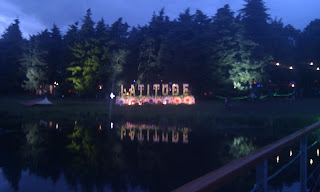
Latitude is a music festival with a difference, also featuring comedy, theatre and literature among much much more. I just got back from this year's festival and thought I'd write about the amazing wordsmithing I found there.
I spent a lot of time in the poetry tent and the poets that I saw read/perform include:
- Sophie Hannah
- Jo Shapcott
- Dizraeli and the Small Gods
- Amy Blakemore
- Hannah Jane Walker
- Kate Fox News
- Jack Dean
- Mab Jones
- Sam Riviere
Who shone? Dizraeli and the Small Gods - a beautiful, emotional mix of music, rap and poetry; Mab Jones - comic, honest poetry about life's minutiae, really loved it; Hannah Jane Walker for thought-provoking, lyrical poems; and Amy Blakemore for a young voice with surprising maturity and real originality. I urge you to check these guys out online, they were fantastic, and I am going to try and persuade a bookshop that I know in Wales to book a reading with Mab Jones!
Who disappointed me? Well, no one really, all the acts I saw were of a really high quality. However, Sophie Hannah's reading was more like a rant and although humourous at times I also left wondering if she was a psychopath..... Sam Riviere's work seemed, from what I caught of it, to be about the issues of identity and being an outsider, including a long poem about a trip to America. Interesting but not my personal cup of tea. Jo Shapcott read a series of poems about bees, and at that point I had to leave. But I was disappointed with her reading - it lacked audience connection, I felt, and although I love her poetry, the beekeeper in me (yes, I do actually keep bees, have done for 6 years now I think) was frustrated with her overly simplistic explanations to the audience about the science behind the poetry, the science of bees, and her mis-pronunciation of the word 'propolis'. But that's just me being nit-pickety.
What really fascinated me however was the different reading/performing styles of the poets. Some read from books or pieces of paper, e.g. Amy Blakemore, Sophie Hannah, Jo Shapcott - whereas others recited their work from memory, e.g. Mab Jones, Dizraeli, Jack Dean. Both methods worked well but undoubtedly those who had memorised their poems gave more energetic performances. So I picked up some interesting tips for when I am brave enough to finally enter an open mic! Who knows, maybe at next year's Latitude...?
Anyway, just a few musings on the world of the live spoken-word performance. For those who are into performance poetry like me, I can highly recommend Latitude festival; the poetry line-up was wide-reaching, varied and inspiring.
Friday, July 8, 2011
Paul Henry Poetry Workshop 1
Wednesday night I went to Bookish in Crickhowell, Wales, and took part in a poetry workshop with poet Paul Henry. It was a great success, a lovely workshop in a cosy atmosphere. A little daunting reading my work out to a bunch of complete strangers! But really improved my confidence in a workshop setting and met some lovely people.
We began with a free-writing exercise, based on the theme of 'where I come from...', before looking at a few poems based around the idea of place, and then attempting to write our own poetry. Everyone in the class came up with some really cool ideas, I was surprised and a little intimidated by the standard, even though half of us had never written anything before! Anyway, I didn't really do as well - it was a great workshop - but I felt that I lacked life & travel experience and distance from my birthplace which may have helped.
The 'poetry' I came up with isn't very good. The workshop made me become more aware of my writing process, through making me try a completely new method. I found writing after - or imitating the first line as a trigger - the poems we looked at (one by R.S Thomas, another by Kit Wright, another that I can't remember right now) challenging and completely new. These are the results so far, but there is nothing I am even slightly happy with yet. However I shall keep trying!
Anyway, this post will show you what I came up with during the workshop and afterwards. I hope it encourages others to come along to the next workshop or to take the plunge and go to a similar writing event. I'd never done anything like this before, and I have never shown my work to anybody in person before, let alone read it out loud, but I loved the experience and can't wait for the next one!
FREEWRITING: WHERE I COME FROM...
er, what shall I write? B_, or B_grad as I call it, kind of grotty but posh in places, or more precisely a little village called O_, a long high street of georgian-fronted houses built along a geological faultline between the clays and chalk & flint, surrounded by fields with its own castle, and of course the sound of the motorway/by-pass always going, cows behind the housing estate mooing in the heat, the swampy ponds in the fields with the fallen oak I used to climb as a kid, oh dear what next can't think of anything, the churchyard with the graves of the two French soldiers, rooks, jackdaws that descend on our garden and eat the animal food, mistletoe growing on oak trees, the river full of crayfish and trout and watermint, the canal where I once saw an otter with her cub,
WORKSHOP ATTEMPTS AT POETRY - came out more like more freewriting
To live in the Home Counties is to
be strung between the motorway and hedgerows
full of fruit as shiny as Next Door's new Audi
that cannot be left outside for fear of pigeon droppings. It is to
To live between two countries is to be always having to choose
Christmas in Wales or in England?
To live in my home town is to... (very scribbled 3rd draft)
be somewhere between the jaguar-driving cricket clubbers, ex-military, busy-bodied, feeding the charity shop with last week's trends: a gucci handbag, real italian leather, a laura ashley dress, a striped armani shirt - and the one's down B_ Road, where the drugs and murderers are. It is to revel in gossip, the GP dating the shopkeeper's estranged wife who had an affair with so-and-so, the scandal of the hint of the possibility of encroaching supermarkets versus the convenience of waitrose ready meals and the battle of the georgian-fronted high street and the affordable housing estates at christmas: tasteful blue lights, holly wreaths, versus houses bedecked with americana
POST WORKSHOP DRAFTING
Tiptoe over conifer needle-strewn tarmac for fear of dog shit, its orangey iron-smell sharp, making your nostrils flare. As you walk brambles claw their way over the tops of the fence, snagging your hair and clothes. Burs coat the hem of your sleeve. A snail's shell cracks underfoot. A blackbird cackles in fear, swooping in front of you like a dolphin before a ship.
The path is dark. Dank. Damp. Houses rise unfriendly behind the fences on either side. Blank windows. Net curtains. Peeking out from behind the conifer trees. The path is rising, inclined to the breast that continues, it seems, ito the grey ink of the sky. Stones, gravel, punching through the soles of your shoes.
Until you emerge, blinking, blinded and shocked by the view. A field of blue-green wheat stretching to a hedgerow horizon. Oast roofs in red and mossy tiles poke like upturned strawberries from amongst the greenery. Unseen cricket drums a lazy rhythm. The air tastes of poppies and mallows, watermint from the river, hobby farm sheep, oak trees.
You feel that you can breathe it in, this openness, the wheat
the egg-brown earth, its chalk, its flint, is unyielding beneath your feet.
DRAFT 3
dog shit, orangey iron-smell sharp, makes nostrils flare.
brambles clawing over top of fence, snag hair.
burs broider hem of sleeve. snail's shell cracks underfoot
blackbird cackles in fear, swoop
in front like dolphin before ship. Path. Damp. Narrow.
Houses unfriendly, fences: empty windows.
Net curtains. Peek.
path, inclined to grey sky ink.
emerge, blinking, shocked by view
field of blue
wheat stretches to hedgerow horizon. Oast roofs, red mossy
tiles, upturned strawberries amonst greenery.
Unseen cricket drums lazy
rhythm. air taste poppies, mallows, hobby farm sheep, oak trees
breathe it in, openness, wheat
egg-brown earth, chalk, flint, unyielding beneath my feet.
We began with a free-writing exercise, based on the theme of 'where I come from...', before looking at a few poems based around the idea of place, and then attempting to write our own poetry. Everyone in the class came up with some really cool ideas, I was surprised and a little intimidated by the standard, even though half of us had never written anything before! Anyway, I didn't really do as well - it was a great workshop - but I felt that I lacked life & travel experience and distance from my birthplace which may have helped.
The 'poetry' I came up with isn't very good. The workshop made me become more aware of my writing process, through making me try a completely new method. I found writing after - or imitating the first line as a trigger - the poems we looked at (one by R.S Thomas, another by Kit Wright, another that I can't remember right now) challenging and completely new. These are the results so far, but there is nothing I am even slightly happy with yet. However I shall keep trying!
Anyway, this post will show you what I came up with during the workshop and afterwards. I hope it encourages others to come along to the next workshop or to take the plunge and go to a similar writing event. I'd never done anything like this before, and I have never shown my work to anybody in person before, let alone read it out loud, but I loved the experience and can't wait for the next one!
FREEWRITING: WHERE I COME FROM...
er, what shall I write? B_, or B_grad as I call it, kind of grotty but posh in places, or more precisely a little village called O_, a long high street of georgian-fronted houses built along a geological faultline between the clays and chalk & flint, surrounded by fields with its own castle, and of course the sound of the motorway/by-pass always going, cows behind the housing estate mooing in the heat, the swampy ponds in the fields with the fallen oak I used to climb as a kid, oh dear what next can't think of anything, the churchyard with the graves of the two French soldiers, rooks, jackdaws that descend on our garden and eat the animal food, mistletoe growing on oak trees, the river full of crayfish and trout and watermint, the canal where I once saw an otter with her cub,
WORKSHOP ATTEMPTS AT POETRY - came out more like more freewriting
To live in the Home Counties is to
be strung between the motorway and hedgerows
full of fruit as shiny as Next Door's new Audi
that cannot be left outside for fear of pigeon droppings. It is to
To live between two countries is to be always having to choose
Christmas in Wales or in England?
To live in my home town is to... (very scribbled 3rd draft)
be somewhere between the jaguar-driving cricket clubbers, ex-military, busy-bodied, feeding the charity shop with last week's trends: a gucci handbag, real italian leather, a laura ashley dress, a striped armani shirt - and the one's down B_ Road, where the drugs and murderers are. It is to revel in gossip, the GP dating the shopkeeper's estranged wife who had an affair with so-and-so, the scandal of the hint of the possibility of encroaching supermarkets versus the convenience of waitrose ready meals and the battle of the georgian-fronted high street and the affordable housing estates at christmas: tasteful blue lights, holly wreaths, versus houses bedecked with americana
POST WORKSHOP DRAFTING
Tiptoe over conifer needle-strewn tarmac for fear of dog shit, its orangey iron-smell sharp, making your nostrils flare. As you walk brambles claw their way over the tops of the fence, snagging your hair and clothes. Burs coat the hem of your sleeve. A snail's shell cracks underfoot. A blackbird cackles in fear, swooping in front of you like a dolphin before a ship.
The path is dark. Dank. Damp. Houses rise unfriendly behind the fences on either side. Blank windows. Net curtains. Peeking out from behind the conifer trees. The path is rising, inclined to the breast that continues, it seems, ito the grey ink of the sky. Stones, gravel, punching through the soles of your shoes.
Until you emerge, blinking, blinded and shocked by the view. A field of blue-green wheat stretching to a hedgerow horizon. Oast roofs in red and mossy tiles poke like upturned strawberries from amongst the greenery. Unseen cricket drums a lazy rhythm. The air tastes of poppies and mallows, watermint from the river, hobby farm sheep, oak trees.
You feel that you can breathe it in, this openness, the wheat
the egg-brown earth, its chalk, its flint, is unyielding beneath your feet.
DRAFT 3
dog shit, orangey iron-smell sharp, makes nostrils flare.
brambles clawing over top of fence, snag hair.
burs broider hem of sleeve. snail's shell cracks underfoot
blackbird cackles in fear, swoop
in front like dolphin before ship. Path. Damp. Narrow.
Houses unfriendly, fences: empty windows.
Net curtains. Peek.
path, inclined to grey sky ink.
emerge, blinking, shocked by view
field of blue
wheat stretches to hedgerow horizon. Oast roofs, red mossy
tiles, upturned strawberries amonst greenery.
Unseen cricket drums lazy
rhythm. air taste poppies, mallows, hobby farm sheep, oak trees
breathe it in, openness, wheat
egg-brown earth, chalk, flint, unyielding beneath my feet.
Thursday, June 23, 2011
77 Love Sonnets by Garrison Keillor
I got this beautiful little book as a gift. It comes with 2 CDs of Garrison reading and singing the sonnets, which I loved. I am a big fan of his, I love the Lake Woebegon stories - I have never read them, only listened to them on tape. So the fact that I could read and listen to these sonnets was lovely.
After reading the first two sonnets my reaction was "wow! these are really good!" and this reaction continued to the end of the collection. Not to say that there aren't some weaker ones, but I was struck by how cleverly Keillor uses the sonnet form. I loved the references to earlier sonnets, for example in 'My Love' which references Bunyan, Herrick, Marlowe...but the real strength of this collection is Keillor's observations of ordinary humanness and exquisitely playful matching of language and form.
I loved this little book. Lots of it's about love, lots about sex, lots about growing old, and lots about ordinary people, and lots of other themes to boot. Beautifully written sonnets with Keillor's own brand of tender humour. Loved it.
After reading the first two sonnets my reaction was "wow! these are really good!" and this reaction continued to the end of the collection. Not to say that there aren't some weaker ones, but I was struck by how cleverly Keillor uses the sonnet form. I loved the references to earlier sonnets, for example in 'My Love' which references Bunyan, Herrick, Marlowe...but the real strength of this collection is Keillor's observations of ordinary humanness and exquisitely playful matching of language and form.
I loved this little book. Lots of it's about love, lots about sex, lots about growing old, and lots about ordinary people, and lots of other themes to boot. Beautifully written sonnets with Keillor's own brand of tender humour. Loved it.
Saturday, April 30, 2011
Flo's Own...Poetry: Portrait of the Escapologist, in Macroscopic Quantum State

This poem came to me as a combination of Francis Bacon's painting, and a scene from The Terminator 2 when the Terminator melts, and the drops of liquid start trembling, moving and reamalgamating.
This led to some research into superfluids, photoisomerisation and macroscopic quantum state. All very scientific and I don't understand any of it, but it says what I want it to - 'superfluid' is full of soft slippery sounds, and is perfect for the movement of drops of liquid that I wanted to convey.
First draft, took 30 mins to write after research.
Portrait of the Escapologist, in Macroscopic Quantum State
(After Francis Bacon's 'Seated Figure')
straightjacketed in skin (on a camel's back) i am an acrobat
hulahooping, melting, superfluiding
into the corner, and crawling up the wall...
(c) stays with me, 2011
Tuesday, April 26, 2011
The Thing in the Gap-Stone Stile, by Alice Oswald
Alice Oswald: successful British poet. Her most recent collection is 'A Sleepwalk on the Severn', I think published earlier this year or late 2010. Gap-Stone Stile was her first collection, from years ago. I know she's a well-respected poet but this was the first of her work I have read.
I quite enjoyed it actually. Some of the stuff just didn't do it for me - some of the Sea Sonnets, for example, to my poetic ear just didn't 'sing', and there were aspects of certain poems that irritated me a little - some just didn't ring true, sounded a bit pretentious. But in all I really liked the collection and I can understand why Oswald is as well-respected as she is. I'm sure her later collections are much more fully-formed.
My favourite poems were The Melon Grower, about a man who neglects his family as he cares for his melon plants (I have grown melons myself, and became quite attached to them, so I could sympathise with his predicament!), one about owls in which there was the lovely line 'an owl about the size of a vicar' - loved it. That line really stood out for me, the incongruity of its humour in a poem with a more serious tone - and a couple of poems addressed to the only-just tolerated nextdoor neighbour. For me it was the flashes of humour in the collection, and the human stories that shone, rather than the soliloquising about water and gardens and nature, which is what Oswald is particularly known for. No - those weren't bad, but they didn't move me. Personally, I feel that a nature poem has to absolutely convey a sense of sheer wonder, and the ones in this collection didn't communicate that to me. However, Oswald's softly-spoken but sharp observations of humanity were brilliant.
At the end of the collection is a long poem about three men from the village of Gotham who go to try and catch the moon in a net (and its title is similarly self-explanatory). Strange. Some of the language was interesting, but it didn't speak to me. The poet's message or whatever it was she wanted to communicate went over my head. It seemed to be long and pretentious for the sake of being long and pretentious, and mostly lacked Oswald's otherwise frequent and clever use of half-rhyme. Didn't get it, although I found the explanation of the ideas behind the poem very entertaining and interesting, and intend to research Gotham - and its strange antic disposition - a little further.
In all, an interesting collection, but one that I sometimes found too serious, and occasionally a little obscure and pretentious. However, there were some lovely lyrical lines and the flashes of human lives and humour were a joy to read. I will read this collection again at some point, and I definitely want to read some of Alice Oswald's later works. A 5 or 6 out of 10 for me, but an intriguing and encouraging one.
I quite enjoyed it actually. Some of the stuff just didn't do it for me - some of the Sea Sonnets, for example, to my poetic ear just didn't 'sing', and there were aspects of certain poems that irritated me a little - some just didn't ring true, sounded a bit pretentious. But in all I really liked the collection and I can understand why Oswald is as well-respected as she is. I'm sure her later collections are much more fully-formed.
My favourite poems were The Melon Grower, about a man who neglects his family as he cares for his melon plants (I have grown melons myself, and became quite attached to them, so I could sympathise with his predicament!), one about owls in which there was the lovely line 'an owl about the size of a vicar' - loved it. That line really stood out for me, the incongruity of its humour in a poem with a more serious tone - and a couple of poems addressed to the only-just tolerated nextdoor neighbour. For me it was the flashes of humour in the collection, and the human stories that shone, rather than the soliloquising about water and gardens and nature, which is what Oswald is particularly known for. No - those weren't bad, but they didn't move me. Personally, I feel that a nature poem has to absolutely convey a sense of sheer wonder, and the ones in this collection didn't communicate that to me. However, Oswald's softly-spoken but sharp observations of humanity were brilliant.
At the end of the collection is a long poem about three men from the village of Gotham who go to try and catch the moon in a net (and its title is similarly self-explanatory). Strange. Some of the language was interesting, but it didn't speak to me. The poet's message or whatever it was she wanted to communicate went over my head. It seemed to be long and pretentious for the sake of being long and pretentious, and mostly lacked Oswald's otherwise frequent and clever use of half-rhyme. Didn't get it, although I found the explanation of the ideas behind the poem very entertaining and interesting, and intend to research Gotham - and its strange antic disposition - a little further.
In all, an interesting collection, but one that I sometimes found too serious, and occasionally a little obscure and pretentious. However, there were some lovely lyrical lines and the flashes of human lives and humour were a joy to read. I will read this collection again at some point, and I definitely want to read some of Alice Oswald's later works. A 5 or 6 out of 10 for me, but an intriguing and encouraging one.
Sunday, February 27, 2011
Flo's Own...Poetry: How To Mummify Your Heart
This one just jumped out of nowhere. For some reason I was researching tylosis (how trees stop themselves from rotting in the middle) this week. Went for a walk in the woods, saw lots of fallen trees with hollow middles. Then last night out this one popped. This is draft 1. Don't know whether I like it or not yet. But here it is.
How to Mummify your Heart
First, you must plant your feet in the ground, and draw
up water by capillary action until your toes go pruney
(this shrivelling is essential - it's part of the magic).
Then take a deep breath and hold it. Stay as still as Saint
Kevin until you have sucked in all the CO2, then breathe out
the nitrogen and oxygen. You may find it easier
to whittle out the unwanted air by whistling
as you exhale. Step three is to wait for some bright
sunshine. Savour its warmth on your skin. Your eyes
will turn green. Keep them open, and stare into the sun.
Now you are photosynthesising. You'll feel a tingle
in your bloodstream - try not to panic, ladies and gentlemen,
this is perfectly normal. When you have photosynthesised enough
to have built up some stores of waste products,
set aside your resins and gums.
Now, here's one I made earlier. Watch as I unscrew my ribs
and open up from the sternum; you will see a hard and woody
centre. It's dead wood. As I have expanded
my core has died. But so that I do not become
all hollow on the inside I plug
my frail veins with the resins and gums. This we call
tylosis. When you've practised, this will come
as easily as transpiration, as reflexive as osmosis.
But for now, concentrate really hard. Be aware
of your spinal column, your veins, your aorta.
This should feel almost like a meditation. Imagine
the waste resins and gums pumping through your bloodstream.
Direct them to your heart. Don't get confused between
the pulmonary vein and artery, they're not the same
as your other tubes. Madam, you on the left -
I see that you are getting there. Watch, everyone, the colour leaving her face,
her expression blankening. Very good, very good. Now
open up your ribs - that's it - let's check.
Your xylem is as hard as concrete, madam.
Keep trying everyone else! If you want to mummify your heart
perseverance is key. Look at madam here. There's a breezeblock in her chest.
Excellent!
(c) stays with me.
How to Mummify your Heart
First, you must plant your feet in the ground, and draw
up water by capillary action until your toes go pruney
(this shrivelling is essential - it's part of the magic).
Then take a deep breath and hold it. Stay as still as Saint
Kevin until you have sucked in all the CO2, then breathe out
the nitrogen and oxygen. You may find it easier
to whittle out the unwanted air by whistling
as you exhale. Step three is to wait for some bright
sunshine. Savour its warmth on your skin. Your eyes
will turn green. Keep them open, and stare into the sun.
Now you are photosynthesising. You'll feel a tingle
in your bloodstream - try not to panic, ladies and gentlemen,
this is perfectly normal. When you have photosynthesised enough
to have built up some stores of waste products,
set aside your resins and gums.
Now, here's one I made earlier. Watch as I unscrew my ribs
and open up from the sternum; you will see a hard and woody
centre. It's dead wood. As I have expanded
my core has died. But so that I do not become
all hollow on the inside I plug
my frail veins with the resins and gums. This we call
tylosis. When you've practised, this will come
as easily as transpiration, as reflexive as osmosis.
But for now, concentrate really hard. Be aware
of your spinal column, your veins, your aorta.
This should feel almost like a meditation. Imagine
the waste resins and gums pumping through your bloodstream.
Direct them to your heart. Don't get confused between
the pulmonary vein and artery, they're not the same
as your other tubes. Madam, you on the left -
I see that you are getting there. Watch, everyone, the colour leaving her face,
her expression blankening. Very good, very good. Now
open up your ribs - that's it - let's check.
Your xylem is as hard as concrete, madam.
Keep trying everyone else! If you want to mummify your heart
perseverance is key. Look at madam here. There's a breezeblock in her chest.
Excellent!
(c) stays with me.
Tuesday, February 22, 2011
'What the Water Gave Me: Poems After Frida Kahlo' by Pascale Petit
This book has been haunting me for a while, and today I finally bought it from Bookish, an independent bookstore in Crickhowell, Wales (can't recommend it enough - lovely little shop, and a brilliant budding events calendar). I've been dipping into poetry unstoppably over the last few days, maybe because it feels like a worthwhile distraction from my upcoming deadlines (7 of them!) or perhaps because it gives me a short burst of literature-related ecstasy and I'm too tired to bother with a whole novel. Anyway, literally 45 minutes ago I bought 'What the Water Gave Me' and I've been reading it. At last!!
First of all, a bit of background. I've loved Frida Kahlo's paintings since I was about 12 (I remember first reading her name in a Jacqueline Wilson book). I'm an art and literature student, and although in the next stage of my studies I hope to concentrate on literature, art is my second love, so I've been very interested to see how Pascale Petit blends the two together. Frida Kahlo in particular is fascinating: she lived through so much, not just her personal experience, but world events, and she was one of the few Surrealist artists who were women. She had a turbulent life. She remains a figure of mystery and semi-myth. As an equality-of-the-sexes-ist (okay, FEMINIST. There we go, I said the scary word) she fascinates me - she must have had so much strength to survive all that she did, but at the same time she was vulnerable and Diego Rivera trod on her a bit. She's an interesting character. Yes, as I said, semi-mythological.
Background to the story of me and this book: first saw it in Waterstones months ago, it's been popping up all over my Amazon recommendations, read up about it, bought a tutorial of Petit's from The Poetry School (Towards a Collection - very good, wish I had the time and money to take one of her courses), saw it in Waterstones again left to think about it, went back and they had run out of copies. So after all that I now have it.
When I first heard about the book, I was a bit sceptical; it seemed quite a strange thing to me for a poet to try and get under the skin of another REAL person, someone who had their own internal experience that they chose not to put into poetry, and Petit seems to do this more intimately and intensely than other poets (those I have read) who are inspired by paintings or other arts. But now, after reading some of her work, and after the Poetry School tutorial, I understand better what it was that Petit is doing with Frida Kahlo. One of the reviews on the back of the book describes it as 'ventriloquism', and I think that this is a helpful analogy. Petit is exploring the woman and the myth of Frida Kahlo, and how the two reinforce and contradict one another. Kahlo's paintings, her expression of her experience, are interpreted into words by another artist. If we imagine Kahlo and her experience as the word of 'god', Petit is writing the King James bible. It isn't Kahlo herself, but boy is it beautiful English, and it distills her myth into delicious words.
If any of that makes sense. Basically what I'm trying to say is that despite my early misgivings, Petit's relationship with the spirit of Kahlo isn't weird at all. I feel that Petit isn't trying to write or be or sell anything that isn't her, herself. It's just that shes doing it through the exploration of the myth of Kahlo, and what might have been behind the myth.
Anyway, onto the poetry.
Petit writes concisely. Her poems take a variety of forms on the page. She's clearly a poet who really crafts her poems - every word works for its place (my teachers are always spouting on about how this is what makes poetry poetry, but it's amazing the number of published poets who do dilute their message through wasteful words. Petit isn't one of these). Just look at 'a zoo of pinks' ('A Few Small Nips'), 'lightning jigs like skeletons' (She Plays Alone...) and the simple but perfect 'violet morning' of 'The Suicide of Dorothy Hale'.
Petit's vision absolutely sucks you in. Her training as a painter is obvious in her deft use of colour, texture, and the senses. Unike Annie Freud, she shows, rather than tells. Although Petit uses the first person a fair bit, I don't feel that it is monotonous as in Jo Shapcott's 'Of Mutability', as she uses it to express a variety of voices - not just Kahlo's, or her own, but even the characters of the paintings themselves (see 'The Wounded Deer', where it is the deer of the painting speaking to Frida the painter).
I compare Petit's style to that of Ruth Padel; they are two poets who can stick disparate words together to create the perfect image, and who write about beauty and emotion beautifully and emotionally. Petit has done something really clever in these poems - taken the uncomfortable disjointedness of Kahlo's paintings and made beautiful poetry from all that pain - still as haunting but more dreamlike than Kahlo's nightmare reality.
OK, lots of waffle in this review. But basically, three points:
First of all, a bit of background. I've loved Frida Kahlo's paintings since I was about 12 (I remember first reading her name in a Jacqueline Wilson book). I'm an art and literature student, and although in the next stage of my studies I hope to concentrate on literature, art is my second love, so I've been very interested to see how Pascale Petit blends the two together. Frida Kahlo in particular is fascinating: she lived through so much, not just her personal experience, but world events, and she was one of the few Surrealist artists who were women. She had a turbulent life. She remains a figure of mystery and semi-myth. As an equality-of-the-sexes-ist (okay, FEMINIST. There we go, I said the scary word) she fascinates me - she must have had so much strength to survive all that she did, but at the same time she was vulnerable and Diego Rivera trod on her a bit. She's an interesting character. Yes, as I said, semi-mythological.
Background to the story of me and this book: first saw it in Waterstones months ago, it's been popping up all over my Amazon recommendations, read up about it, bought a tutorial of Petit's from The Poetry School (Towards a Collection - very good, wish I had the time and money to take one of her courses), saw it in Waterstones again left to think about it, went back and they had run out of copies. So after all that I now have it.
When I first heard about the book, I was a bit sceptical; it seemed quite a strange thing to me for a poet to try and get under the skin of another REAL person, someone who had their own internal experience that they chose not to put into poetry, and Petit seems to do this more intimately and intensely than other poets (those I have read) who are inspired by paintings or other arts. But now, after reading some of her work, and after the Poetry School tutorial, I understand better what it was that Petit is doing with Frida Kahlo. One of the reviews on the back of the book describes it as 'ventriloquism', and I think that this is a helpful analogy. Petit is exploring the woman and the myth of Frida Kahlo, and how the two reinforce and contradict one another. Kahlo's paintings, her expression of her experience, are interpreted into words by another artist. If we imagine Kahlo and her experience as the word of 'god', Petit is writing the King James bible. It isn't Kahlo herself, but boy is it beautiful English, and it distills her myth into delicious words.
If any of that makes sense. Basically what I'm trying to say is that despite my early misgivings, Petit's relationship with the spirit of Kahlo isn't weird at all. I feel that Petit isn't trying to write or be or sell anything that isn't her, herself. It's just that shes doing it through the exploration of the myth of Kahlo, and what might have been behind the myth.
Anyway, onto the poetry.
Petit writes concisely. Her poems take a variety of forms on the page. She's clearly a poet who really crafts her poems - every word works for its place (my teachers are always spouting on about how this is what makes poetry poetry, but it's amazing the number of published poets who do dilute their message through wasteful words. Petit isn't one of these). Just look at 'a zoo of pinks' ('A Few Small Nips'), 'lightning jigs like skeletons' (She Plays Alone...) and the simple but perfect 'violet morning' of 'The Suicide of Dorothy Hale'.
Petit's vision absolutely sucks you in. Her training as a painter is obvious in her deft use of colour, texture, and the senses. Unike Annie Freud, she shows, rather than tells. Although Petit uses the first person a fair bit, I don't feel that it is monotonous as in Jo Shapcott's 'Of Mutability', as she uses it to express a variety of voices - not just Kahlo's, or her own, but even the characters of the paintings themselves (see 'The Wounded Deer', where it is the deer of the painting speaking to Frida the painter).
I compare Petit's style to that of Ruth Padel; they are two poets who can stick disparate words together to create the perfect image, and who write about beauty and emotion beautifully and emotionally. Petit has done something really clever in these poems - taken the uncomfortable disjointedness of Kahlo's paintings and made beautiful poetry from all that pain - still as haunting but more dreamlike than Kahlo's nightmare reality.
OK, lots of waffle in this review. But basically, three points:
- Beautiful, evocative imagery
- Unique and vibrant vision, an ambitious collection
- Read it, it's really good.
The Mirabelles by Annie Freud, and Gillian Clarke's Collected Poems
'The Mirabelles' is Freud's second collection, has a very pretty front cover and is a Poetry Book Society choice. It is also the first of Freud's work that I have read.
I haven't read the whole of this book, but it's quite an unusual one. It's been very interesting to see a range of what contemporary poetry can be, and The Mirabelles is a good introduction to different styles for someone new to contemporary poetry (like me). It isn't earth-shattering, or ground-breaking, but is unusual.
The collection is split into three different sections, which each showcase different styles and structures. The second section, 'The Inexplicable Human Gorgeousness', is the one I am reading now, and contains a few found poems - i.e. poetry made from an existing text. Although I have enjoyed quite a fair bit of the book so far, the found poems annoyed me. This is just my opinion, but I feel it rather strongly: sticking a few line breaks into someone else's writing does not make a poem. Poetry requires a creative input of vision and skill from the writer. Freud's found poems don't deliver this. To me, these aren't poetry. They're taking credit for someone else's legwork (and I say 'taking credit for', because one of the found poems is mentioned in the blurb, and makes the book sound much more interesting than it really is!).
I enjoy Freud's original work however. The opening poem, 'Squid Sonnet', is one that I particularly liked. In some places her voice seems undeveloped - a bit 'tell', rather than 'show', a bit less vital and vibrant than the work of the fully-formed, mature poetry of Jo Shapcott, for example - but I can see that there is a unique vision under there. I'd recommend borrowing this book from the library and studying it - for me personally, it's poetry to study, rather than to savour.
Gillian Clarke's 'Collected Poems'. Now there's a completely different kettle of fish. Some poetry to really get stuck into. Images and words that you can really taste. And I've only read one section so far!
Gillian Clarke is the Welsh equivalent of Poet Laureate, and I can see why. She writes beautifully, in a variety of forms and styles, with a fully-formed voice that is all her own. She touches so many subjects, absolutely expertly. My favourites include 'Pipistrelle', 'Today' and 'Oranges'. I love the way that she sticks in little bits of Welsh, words that have no exact translation in English, but that fit the meaning perfectly (they are explained - 100% English-speaker friendly, and aren't too numerous, so don't be put off).
I may write a fuller review when I've read more. But for now, all I can say is that if you enjoy poetry, read Gillian Clarke!
I haven't read the whole of this book, but it's quite an unusual one. It's been very interesting to see a range of what contemporary poetry can be, and The Mirabelles is a good introduction to different styles for someone new to contemporary poetry (like me). It isn't earth-shattering, or ground-breaking, but is unusual.
The collection is split into three different sections, which each showcase different styles and structures. The second section, 'The Inexplicable Human Gorgeousness', is the one I am reading now, and contains a few found poems - i.e. poetry made from an existing text. Although I have enjoyed quite a fair bit of the book so far, the found poems annoyed me. This is just my opinion, but I feel it rather strongly: sticking a few line breaks into someone else's writing does not make a poem. Poetry requires a creative input of vision and skill from the writer. Freud's found poems don't deliver this. To me, these aren't poetry. They're taking credit for someone else's legwork (and I say 'taking credit for', because one of the found poems is mentioned in the blurb, and makes the book sound much more interesting than it really is!).
I enjoy Freud's original work however. The opening poem, 'Squid Sonnet', is one that I particularly liked. In some places her voice seems undeveloped - a bit 'tell', rather than 'show', a bit less vital and vibrant than the work of the fully-formed, mature poetry of Jo Shapcott, for example - but I can see that there is a unique vision under there. I'd recommend borrowing this book from the library and studying it - for me personally, it's poetry to study, rather than to savour.
Gillian Clarke's 'Collected Poems'. Now there's a completely different kettle of fish. Some poetry to really get stuck into. Images and words that you can really taste. And I've only read one section so far!
Gillian Clarke is the Welsh equivalent of Poet Laureate, and I can see why. She writes beautifully, in a variety of forms and styles, with a fully-formed voice that is all her own. She touches so many subjects, absolutely expertly. My favourites include 'Pipistrelle', 'Today' and 'Oranges'. I love the way that she sticks in little bits of Welsh, words that have no exact translation in English, but that fit the meaning perfectly (they are explained - 100% English-speaker friendly, and aren't too numerous, so don't be put off).
I may write a fuller review when I've read more. But for now, all I can say is that if you enjoy poetry, read Gillian Clarke!
Monday, February 21, 2011
Jo Shapcott's 'Of Mutability'
I first read Jo Shapcott in Ruth Padel's '50 Ways of Looking at a Poem' which I started dipping into a few months ago. I'd been eyeing up 'Of Mutability' since then, and when it won the Costa prize I knew I had to just bite the bullet and buy it.
I've raced through it, which probably isn't the way to get the most out of a poetry book, but it was very readable. None of the poems in there are too long, which I like. I always find that if I'm flipping through a poetry book, I skip the long ones. I like short to medium length poems. I like concise punchiness.
So does 'Of Mutability' deliver? Certainly the length of the poems fits my personal preferences, but I am in two minds about this collection. There's no denying that it's good. And there's no denying that Shapcott is a talented, well-honed poet with a very clear, recogniseable voice. But at the same time I feel that the collection lacked, in general, a bit of variety. Apart from two stand-out poems (about halfway through the collection), I remember it as kind of homogenised lump. The poems don't vary in length, tone, subject, even voice (3rd/1st person. I find that it's always difficult to decide which voice to use, and it's usually easier to just settle for 1st person, a strategy that Shapcott seems to have followed religiously. It's obviously a very personal, almost intimate collection, so 1st person suits it, but I did find the use of 1st person almost...(I hate to use the word, becuase it really is a good collection, but there's no other word to describe it concisely)....slightly monotonous). In short, it works as a collection. But for me, most of the poems don't stand up on their own.
Shapcott's style and use of language is something I really admire, however. I love how she plays with half-rhyme, alliteration, internal rhyme, and her mixing of specialist, kind of scientific vocabulary with everyday musings. My favourite poems have to be 'Somewhat Unravelled', about dementia, and 'Tea Death', about drowning in tea. For me these two stand out because they deal with serious, difficult subjects with a slightly lighter tone. 'Somewhat Unravelled' contains such lines as 'Don't you want to sell your nail-clippings/ online?' and 'you are a plump armchair...you are a sofa/ rumba', lines that are outwardly humourous but at the same time reveal unflinchingly the difficulty of aging and losing one's memory. 'Tea Death' finishes with a lovely stanza that mentions 'wobbling/ belly buttons'.
Verdict? On the whole not interesting, but enjoyable. One to dip into. I'll reread it, but slower next time, and in tandem with something a little more innovative and with a bit more bite.
I've raced through it, which probably isn't the way to get the most out of a poetry book, but it was very readable. None of the poems in there are too long, which I like. I always find that if I'm flipping through a poetry book, I skip the long ones. I like short to medium length poems. I like concise punchiness.
So does 'Of Mutability' deliver? Certainly the length of the poems fits my personal preferences, but I am in two minds about this collection. There's no denying that it's good. And there's no denying that Shapcott is a talented, well-honed poet with a very clear, recogniseable voice. But at the same time I feel that the collection lacked, in general, a bit of variety. Apart from two stand-out poems (about halfway through the collection), I remember it as kind of homogenised lump. The poems don't vary in length, tone, subject, even voice (3rd/1st person. I find that it's always difficult to decide which voice to use, and it's usually easier to just settle for 1st person, a strategy that Shapcott seems to have followed religiously. It's obviously a very personal, almost intimate collection, so 1st person suits it, but I did find the use of 1st person almost...(I hate to use the word, becuase it really is a good collection, but there's no other word to describe it concisely)....slightly monotonous). In short, it works as a collection. But for me, most of the poems don't stand up on their own.
Shapcott's style and use of language is something I really admire, however. I love how she plays with half-rhyme, alliteration, internal rhyme, and her mixing of specialist, kind of scientific vocabulary with everyday musings. My favourite poems have to be 'Somewhat Unravelled', about dementia, and 'Tea Death', about drowning in tea. For me these two stand out because they deal with serious, difficult subjects with a slightly lighter tone. 'Somewhat Unravelled' contains such lines as 'Don't you want to sell your nail-clippings/ online?' and 'you are a plump armchair...you are a sofa/ rumba', lines that are outwardly humourous but at the same time reveal unflinchingly the difficulty of aging and losing one's memory. 'Tea Death' finishes with a lovely stanza that mentions 'wobbling/ belly buttons'.
Verdict? On the whole not interesting, but enjoyable. One to dip into. I'll reread it, but slower next time, and in tandem with something a little more innovative and with a bit more bite.
Thursday, February 3, 2011
My Own...Poetry: Woman in a Blue Anorak
The other day as I was walking home through a housing estate I was watching a blacbird and his wife dancing and hopping about. Then suddenly something moved in my vision and I saw a woman standing outside a house smoking. I turned to go but for some reason I looked back, and she was gone. Hard to explain why, but this really freaked me out at the time and I decided she must have been a ghost (not sure I actually believe in ghosts but sometimes I let my imagination take me places). This poem was the result.
This is about 3rd draft. When I write a poem it usually starts off as verbal diarrhoeawhere I just get the initial spark down and then the other ideas that flow from it. Then I stick the bits of the verbal diarrhoea together to make draft 2, and then draft 3 refines it further. This all happens very quickly. Then I leave the poem for up to a period of several months and come back to it and tweak it, although by this point it is rare that I rewrite the whole thing (might start something new based on it though). So this one needs to be left for a while to incubate, but here it is as it is now.
Woman in a Blue Anorak
She snatches at the corners of eyes.
Courting blackbirds before her capoeira
their tails treacle and syrup fans.
Her face is blank flesh, melted like ice.
She flicks a cigarette, and as the ash falls like dice
she shifts her weight sideways and
the blackbirds switch to samba.
She could be made of sand,
disintegrating in a breath, leaving only
stiffened-water folds of navy PVC.
She snatches at the corners of eyes.
She flicks her cigarette, and ash falls like slo-mo dice.
Copyright (c) remains with me.
This is about 3rd draft. When I write a poem it usually starts off as verbal diarrhoeawhere I just get the initial spark down and then the other ideas that flow from it. Then I stick the bits of the verbal diarrhoea together to make draft 2, and then draft 3 refines it further. This all happens very quickly. Then I leave the poem for up to a period of several months and come back to it and tweak it, although by this point it is rare that I rewrite the whole thing (might start something new based on it though). So this one needs to be left for a while to incubate, but here it is as it is now.
Woman in a Blue Anorak
She snatches at the corners of eyes.
Courting blackbirds before her capoeira
their tails treacle and syrup fans.
Her face is blank flesh, melted like ice.
She flicks a cigarette, and as the ash falls like dice
she shifts her weight sideways and
the blackbirds switch to samba.
She could be made of sand,
disintegrating in a breath, leaving only
stiffened-water folds of navy PVC.
She snatches at the corners of eyes.
She flicks her cigarette, and ash falls like slo-mo dice.
Copyright (c) remains with me.
Wednesday, February 2, 2011
My Own...Poetry: Holding a Dead Rabbit
Everything is opposites: you fell asleep lying down
so your top is your bottom, and your bottom is your top
and you are solid in the wrong places and soft where you should be strong.
A drop of blood at your nose, congealed around the roots of whiskers,
and a gap between your smiling moustachioed lips showing ivory incisors
and a gash of pink tongue that once felt like soft raindrops.
Puffs of velvet fur spring in angles I have never seen before, in my arms
so close your very crimp is visible, I can see your molecules,
beneath the rigid lids there might still lie
the swimming moon of your cataracts. But why would they
when the curls of your legs are as unstrung as
Odysseus' abandoned bow and your middle
doesn't flutter like it used to. Down you go to the Eternal Burrow,
with Brussels sprouts for the afterlife
and a drop of blood on your nose.
Copyright (C) stays with me.
so your top is your bottom, and your bottom is your top
and you are solid in the wrong places and soft where you should be strong.
A drop of blood at your nose, congealed around the roots of whiskers,
and a gap between your smiling moustachioed lips showing ivory incisors
and a gash of pink tongue that once felt like soft raindrops.
Puffs of velvet fur spring in angles I have never seen before, in my arms
so close your very crimp is visible, I can see your molecules,
beneath the rigid lids there might still lie
the swimming moon of your cataracts. But why would they
when the curls of your legs are as unstrung as
Odysseus' abandoned bow and your middle
doesn't flutter like it used to. Down you go to the Eternal Burrow,
with Brussels sprouts for the afterlife
and a drop of blood on your nose.
Copyright (C) stays with me.
Saturday, January 29, 2011
My Own...Poetry: Thoughts From A Breton Separatist Toad With A Red Feather Beard
Wrote this poem in about twenty minutes. Might not be finished, might be. The idea came from a writing exercise I sometimes do to get me going, where I just write whatever comes into my head for five minutes. That's where the toad and his beard came from. The Breton separatist bit came from some of the people I follow on Twitter! (I'm not a terrorist or anything, I just like to hear about what's going on in Brittany). There are a few little details in this poem about my own childhood, when every holiday was spent in Brittany. We had a wonderful neighbour whom I think of as a surrogate granny, and who was terrified of toads and salamanders, apart from being one of the wisest and kindest people I have ever known. Our garden was full of toads, so every time we found one we would go and show it to her. There is no landscape on earth quite like the Breton. I miss it terribly so this crazy poem is a tribute to one of my favourite places.
Thoughts from a Breton Separatist Toad with a Red Feather Beard
When I was just a comma in my jellied womb
long ago in Finistere, in a quiet freshwater pool
under glowering granite and dripping tongues of ivy,
it felt like sphereing when a fish swam past,
I rolled over in my world and felt a kick in my belly.
Now somewhere by my flimsy-skinned navel
I feel wingbeats when I sing. It is the same feeling,
and I sense myself glowing in the forget-ne-not blood
of a summer sunset; the sky glows like granit rose
or the opal expanse of la Cote d'Emeraude.
My skin was once gwen ha du, now faded to brown-green,
peppered with dimples
like the buckwheat shroud around a sausage. This land
is beautiful and terrible, and as I am le diable, it suits me
to a ty.
A croak rumbles in my belly; I let it go.
I feel wingbeats again. The moon rises and paints the slogans of my skin
proudly gwen ha du. I look around me, feel
the footsteps of a giant, the stillness of stupefied
ancient armies,
here by the side of the same small pool
hidden between glowering granite and dripping tongues of ivy.
copyright (C) 2011 stays with me.
Thoughts from a Breton Separatist Toad with a Red Feather Beard
When I was just a comma in my jellied womb
long ago in Finistere, in a quiet freshwater pool
under glowering granite and dripping tongues of ivy,
it felt like sphereing when a fish swam past,
I rolled over in my world and felt a kick in my belly.
Now somewhere by my flimsy-skinned navel
I feel wingbeats when I sing. It is the same feeling,
and I sense myself glowing in the forget-ne-not blood
of a summer sunset; the sky glows like granit rose
or the opal expanse of la Cote d'Emeraude.
My skin was once gwen ha du, now faded to brown-green,
peppered with dimples
like the buckwheat shroud around a sausage. This land
is beautiful and terrible, and as I am le diable, it suits me
to a ty.
A croak rumbles in my belly; I let it go.
I feel wingbeats again. The moon rises and paints the slogans of my skin
proudly gwen ha du. I look around me, feel
the footsteps of a giant, the stillness of stupefied
ancient armies,
here by the side of the same small pool
hidden between glowering granite and dripping tongues of ivy.
copyright (C) 2011 stays with me.
Subscribe to:
Posts (Atom)